
SAP manages your business. Micraft manages your operations.
The integration between them means production orders, inventory movements, and delivery data flow between both systems automatically — without manual entry on either side.

SAP manages your business. Micraft manages your operations.
The integration between them means production orders, inventory movements, and delivery data flow between both systems automatically — without manual entry on either side.
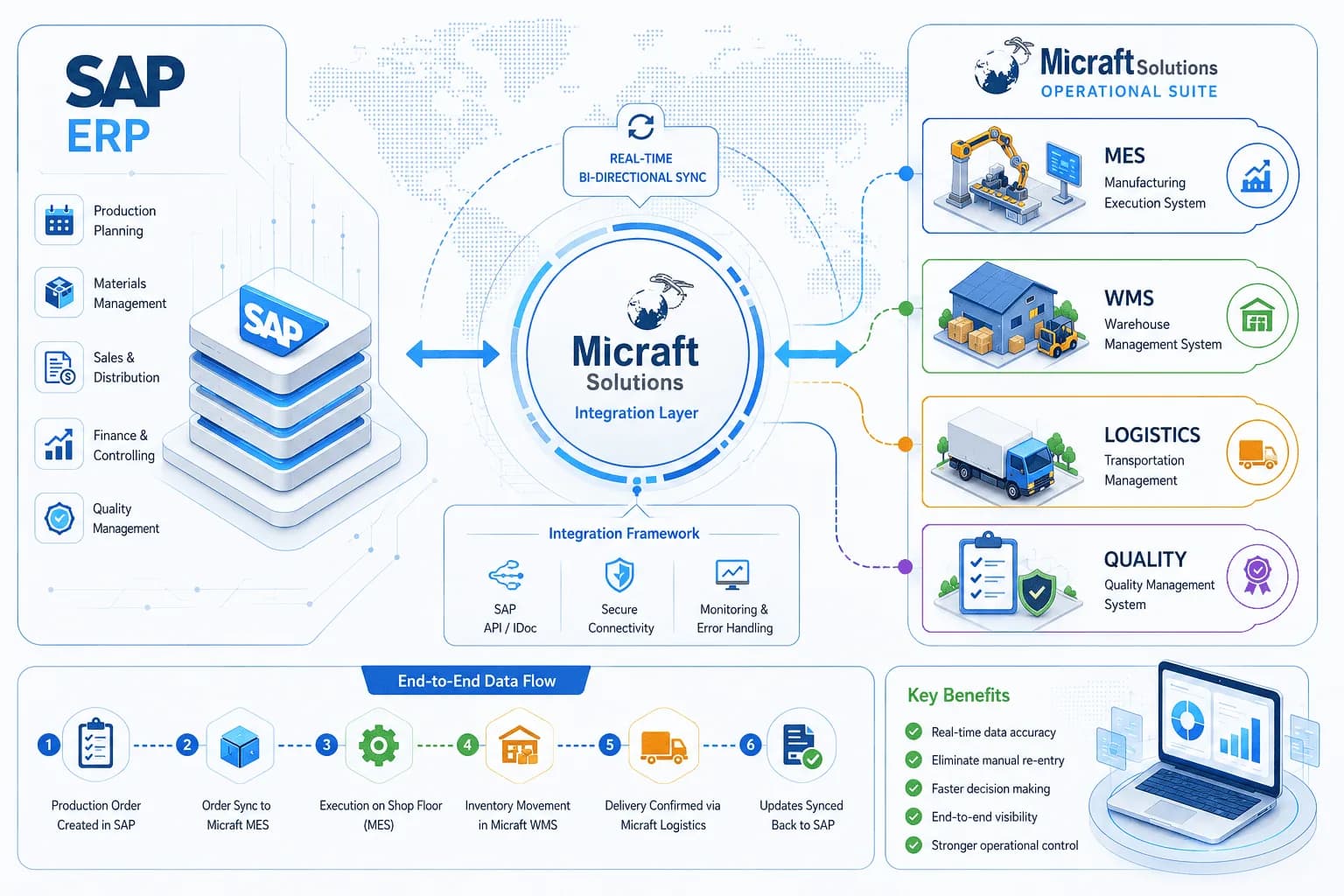
SAP is the system of record for planning, finance, and enterprise data. Micraft is the execution layer where production, warehousing, and logistics actually happen. The integration connects both — so the gap between what SAP knows and what is happening on the floor closes automatically.
Production orders created or released in SAP flow directly into Micraft MES as work orders — with routing, quantities, and scheduling parameters. No manual re-entry. No transcription errors. The shop floor team sees current orders the moment they are released in SAP.
Every stock movement confirmed in Micraft WMS — goods receipt, goods issue, transfer, dispatch — updates SAP inventory in real time. SAP's material management module always reflects the physical stock position without waiting for a batch update.
Shipments confirmed in Micraft's courier aggregator or TMS are confirmed back to SAP's sales and distribution module — updating delivery status, triggering billing where configured, and keeping the customer-facing order status current.
Inspection results recorded in Micraft MES at inline quality checkpoints can be pushed back to SAP QM — linking production quality data to the ERP quality management record without duplicate entry.
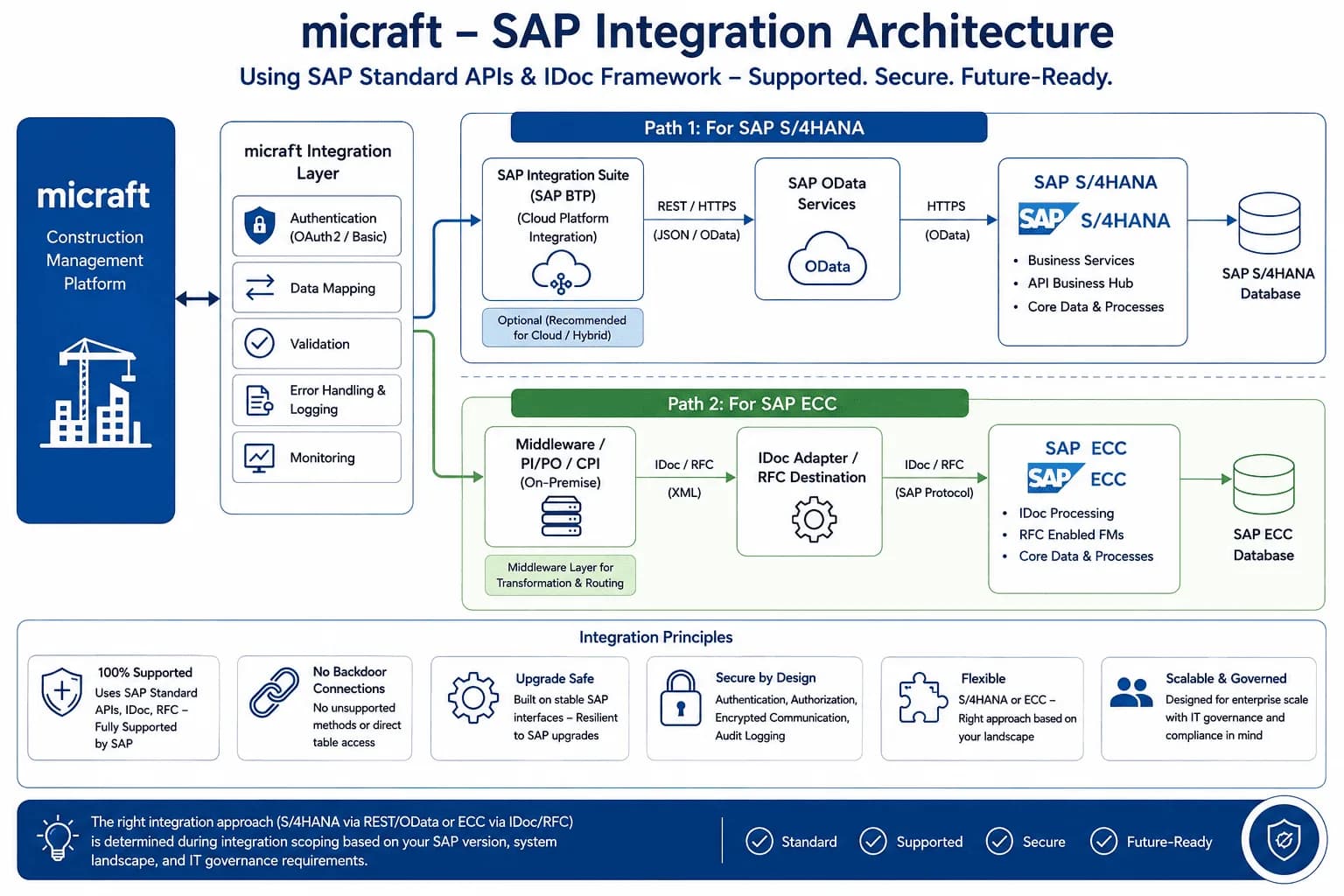
The Micraft-SAP integration uses SAP's standard API and IDoc framework — the established, supported method for SAP external system connectivity. No unsupported backdoor connections. No brittle custom code that breaks with SAP updates.
SAP-Micraft Integration Architecture — IDoc / REST API / OData data flow
Both SAP S/4HANA and ECC are supported. The right approach is determined during the integration scoping based on your SAP version, system landscape, and IT governance requirements. Our integration team will assess and recommend before any build begins.