





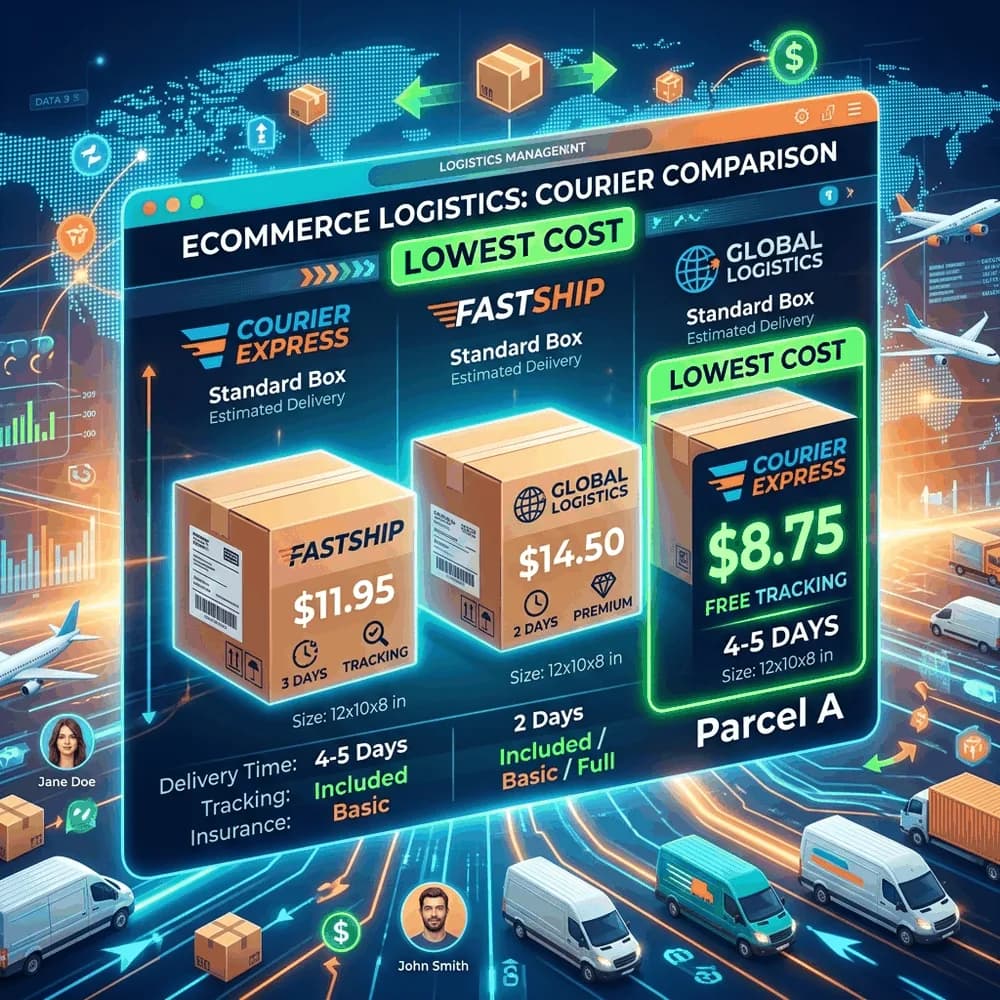
"Rate shopping" is courier aggregator software's most prominently advertised feature. The claim is straightforward: compare rates across all your courier partners before every shipment and always book the cheapest option. The reality of how it works in practice — and what savings are actually achievable — is more nuanced and more interesting than the marketing claim suggests.
What Live Rate Comparison Actually Means
When a courier aggregator claims to provide "live rate comparison," what is actually happening is:
- For each shipment, an API call is made to each configured courier partner
- The API call passes the shipment parameters: origin pin code, destination pin code, weight, dimensions, service type
- Each carrier's API returns the current rate for that specific shipment
- The aggregator compares the returned rates and selects or presents the options
The "live" part matters because courier rates are not static. Carriers adjust rates based on capacity utilisation, fuel surcharges, peak season pricing, and promotional rates. Live API rate fetching captures the current rate, not the last-reviewed rate card.
Why Defaulting to One Carrier Is Not Rate Shopping
Many businesses that use multiple couriers are not actually doing rate shopping. They have a primary carrier they default to for most shipments — because the dispatcher is most familiar with it, because it was the first integration built, or because it worked well for the first few months and became the default.
Rate shopping requires a systematic comparison on every shipment. Not "usually Delhivery, Bluedart for urgent" — but a live comparison of Delhivery, Bluedart, Ecom Express, and any other configured carrier for every shipment before it is booked.
The difference in practice: a business processing 500 daily orders with a primary carrier default makes carrier selection decisions on approximately 20 to 30 shipments per day. A courier aggregator with live rate comparison makes carrier selection decisions on all 500 shipments per day.
What Realistic Savings Look Like
The savings from rate shopping depend on the variation in rates across your configured carrier set for your specific shipment mix. The variables are:
- Destination mix: Rate variation between carriers is much larger for Tier 2, Tier 3, and remote destinations than for metro deliveries. A business with heavy Tier 2 and Tier 3 delivery volume will see larger per-order savings.
- Service type mix: Rate variation between carriers is larger for standard delivery than for express. Express delivery rates are more closely clustered across carriers.
- Order weight distribution: Per-kg rates vary between carriers, and the variation is not uniform across weight bands. A carrier that is cheapest for 0.5kg shipments may not be cheapest for 2kg shipments.